Cross-Industry Workforce Operations
Working Time & Workforce Operations Portal
A single workforce platform for Germany: time records, absences, corrections, documents, employee self-service and payroll-ready exports in one process. The client gained reliable month-end reporting instead of spreadsheets and manual reconciliation.
Cross-Industry Workforce Operations
- Vue 3
- Laravel
- TypeScript
- REST API
- MySQL
- JWT
- Germany-ready Time Tracking
- Industry Workflows
- Payroll Integrations
Project Overview
Before: working time, absences, corrections, documents and payroll data were handled across separate processes. Month-end reporting depended on spreadsheets, manual reconciliation and whether employees and administrators passed the right data in time.
What we built: 6 workforce processes in one platform: employees, time records, absences, approvals, documents and payroll exports. Employees use self-service, while administrators see planned vs actual hours, exceptions and month-end summaries.
Client outcome: one source of truth for working time and absences, traceable correction history, structured payroll data and a reusable foundation that can adapt to different industries, shifts and approval paths.
Project Scope
- Employees: profiles, contracts, hour norms and roles
- Time: planned vs actual hours, shifts, breaks, overtime and corrections
- Absences: vacation, sickness, travel and internal categories
- Approvals: approval paths, roles and decision history
- Documents: contracts, payroll files and employee documents
- Payroll: month-end summaries and structured exports for accounting
System Architecture
The architecture follows the workforce month-end cycle: employees record time, the system collects exceptions, approvals and documents, and administrators receive payroll-ready summaries.
- Workforce Core — Employee profiles, contracts, schedules, hour norms and role-based access.
- Employee Self-Service — Time recording, balances, absence requests, documents and approval status for employees.
- Time Capture & Corrections — Shifts, breaks, planned vs actual hours, overtime and corrections stored as structured events.
- Compliance & Audit Trail — Traceable time events, corrections, approvals and monthly summaries for review and control.
- Industry Rules Layer — Absence types, shift models, break rules, approval paths and roles configurable by industry.
- Documents & Contracts — Contracts, payroll documents, onboarding files and employee records with role-based access.
- Payroll & Accounting Exports — Month-end summaries and exports for payroll, HR and accounting without rebuilding data manually.
- Administration Dashboard — Overview of employees, hours, exceptions, requests, documents and monthly reporting.
Key Features
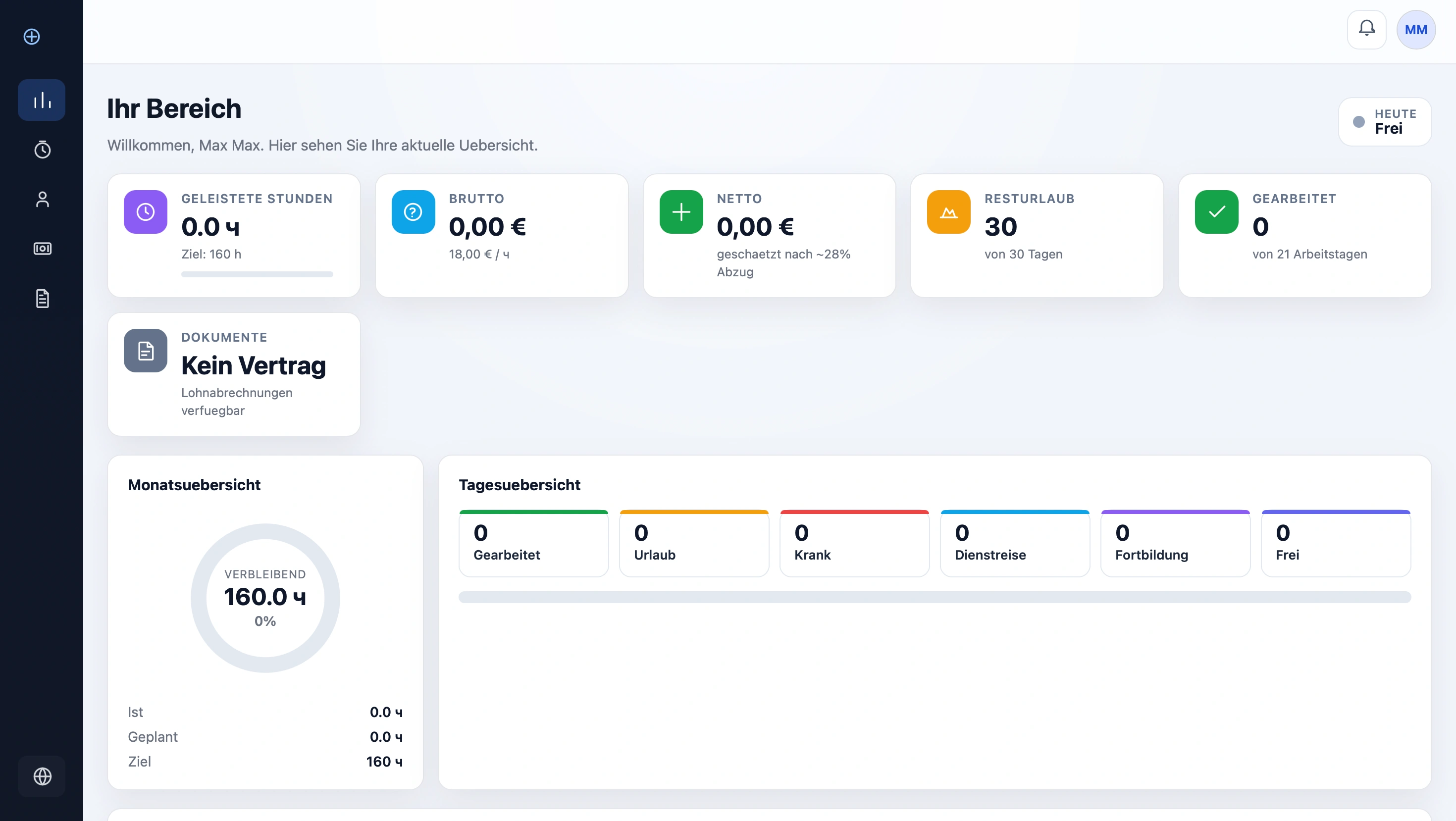
Employee Self-Service Dashboard
Employees record time, review shifts, balances, requests and documents themselves. Administrators no longer need to collect these inputs manually from separate channels.
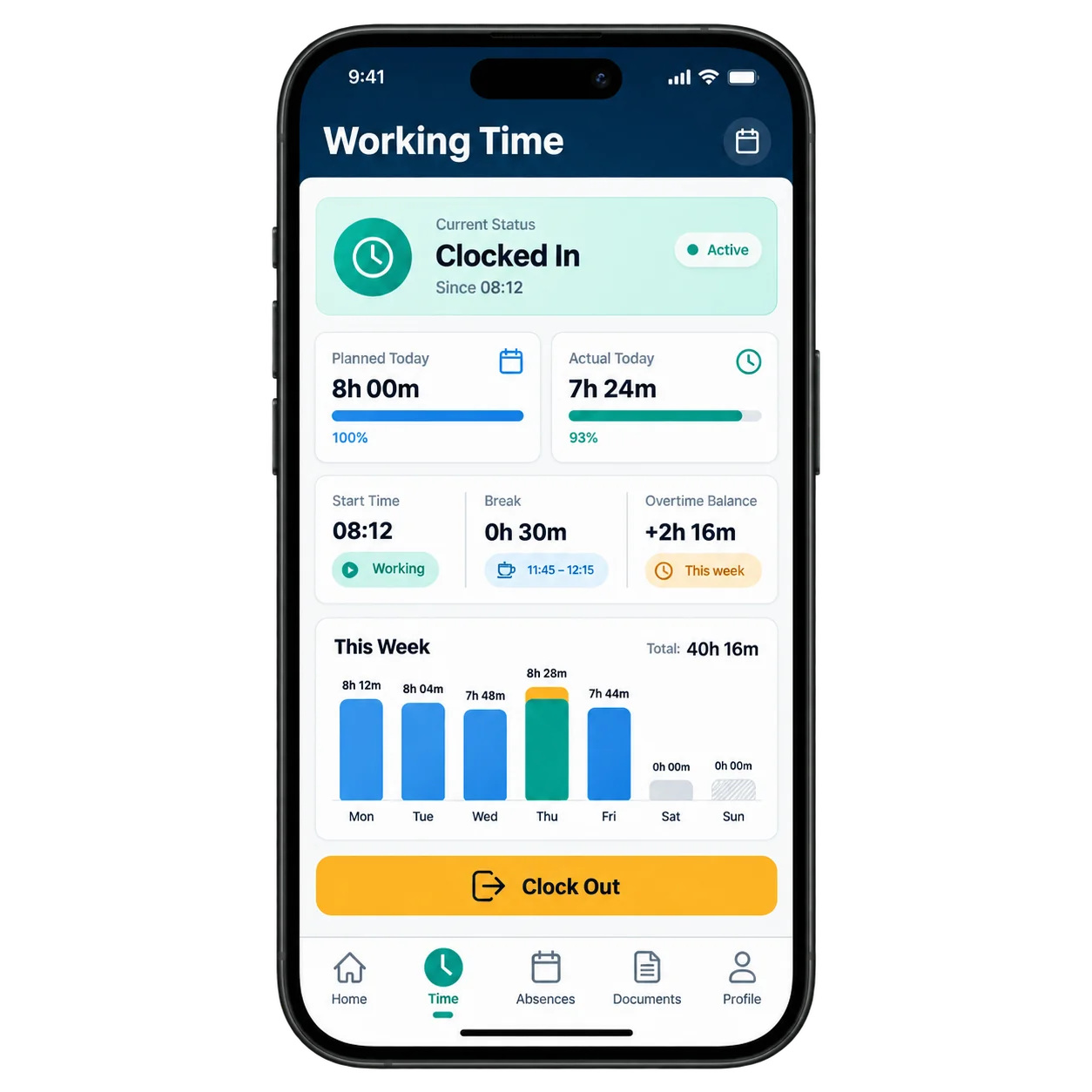
Working Time Tracking
Shifts, breaks, planned vs actual hours, overtime and corrections become structured events instead of spreadsheet rows.
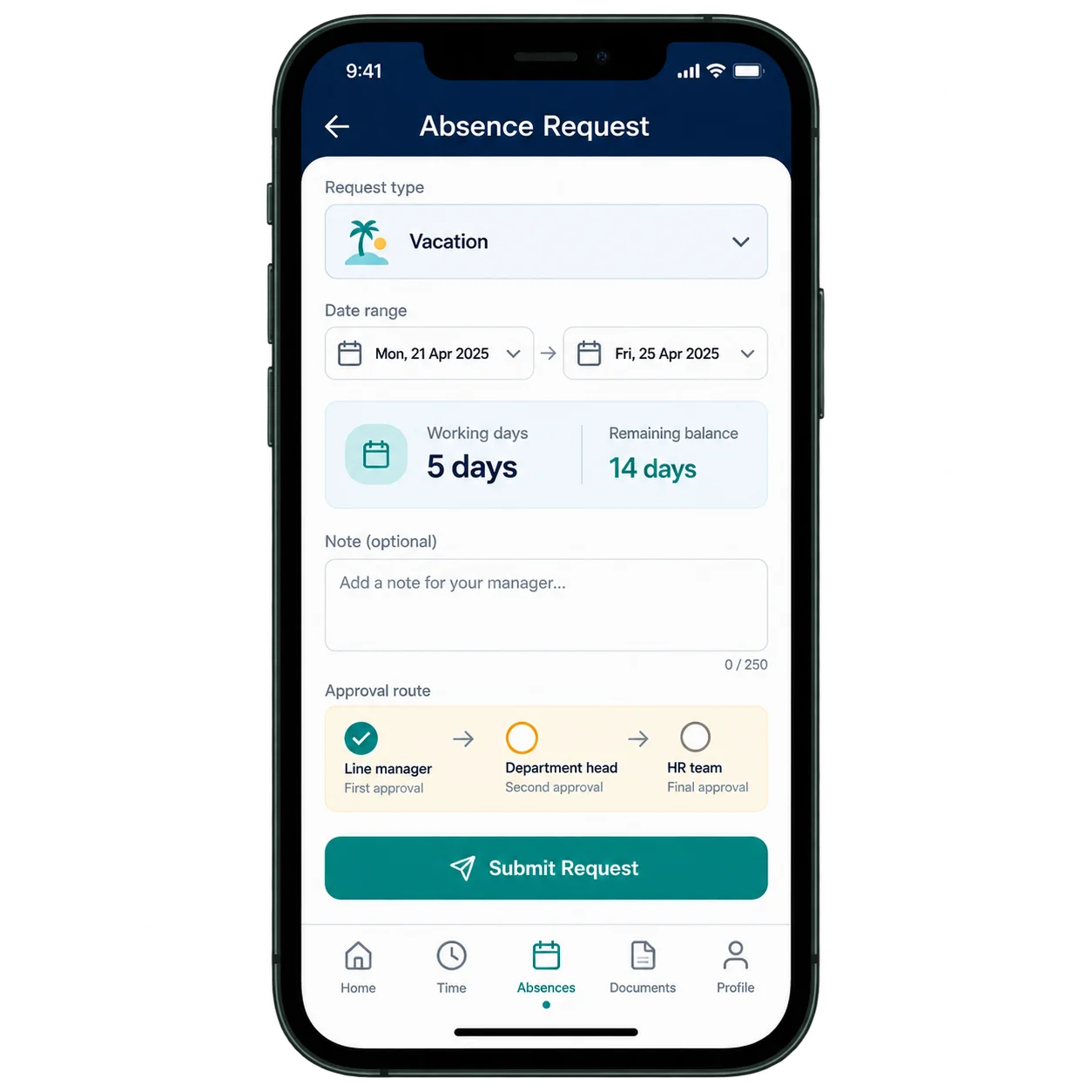
Vacation and Absence Workflows
Vacation, sickness, travel and internal absence categories follow defined approval paths with a clear decision history.
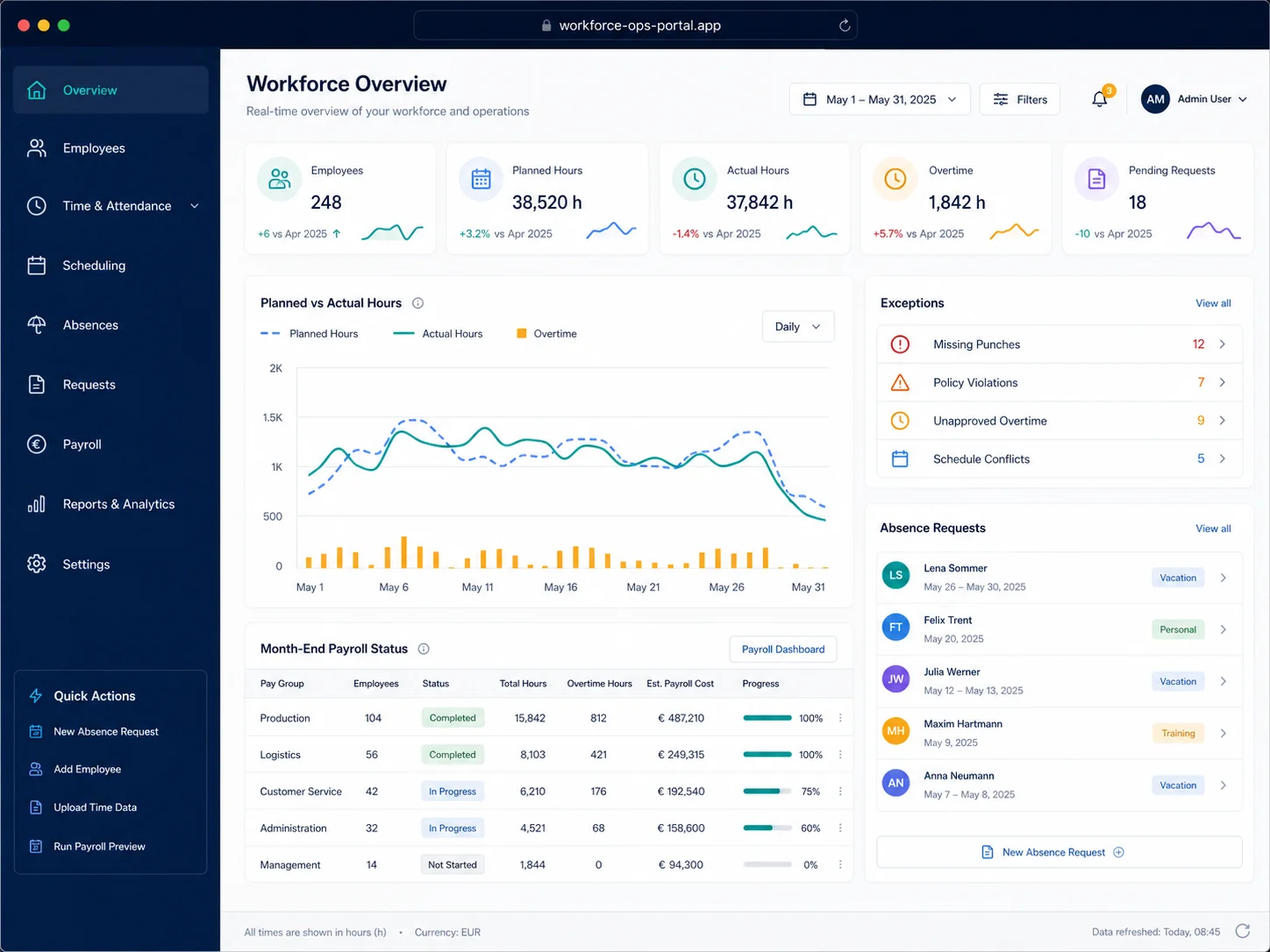
Administration Dashboard
Administrators see profiles, contracts, working time, exceptions, requests and month-end summaries from one control surface.
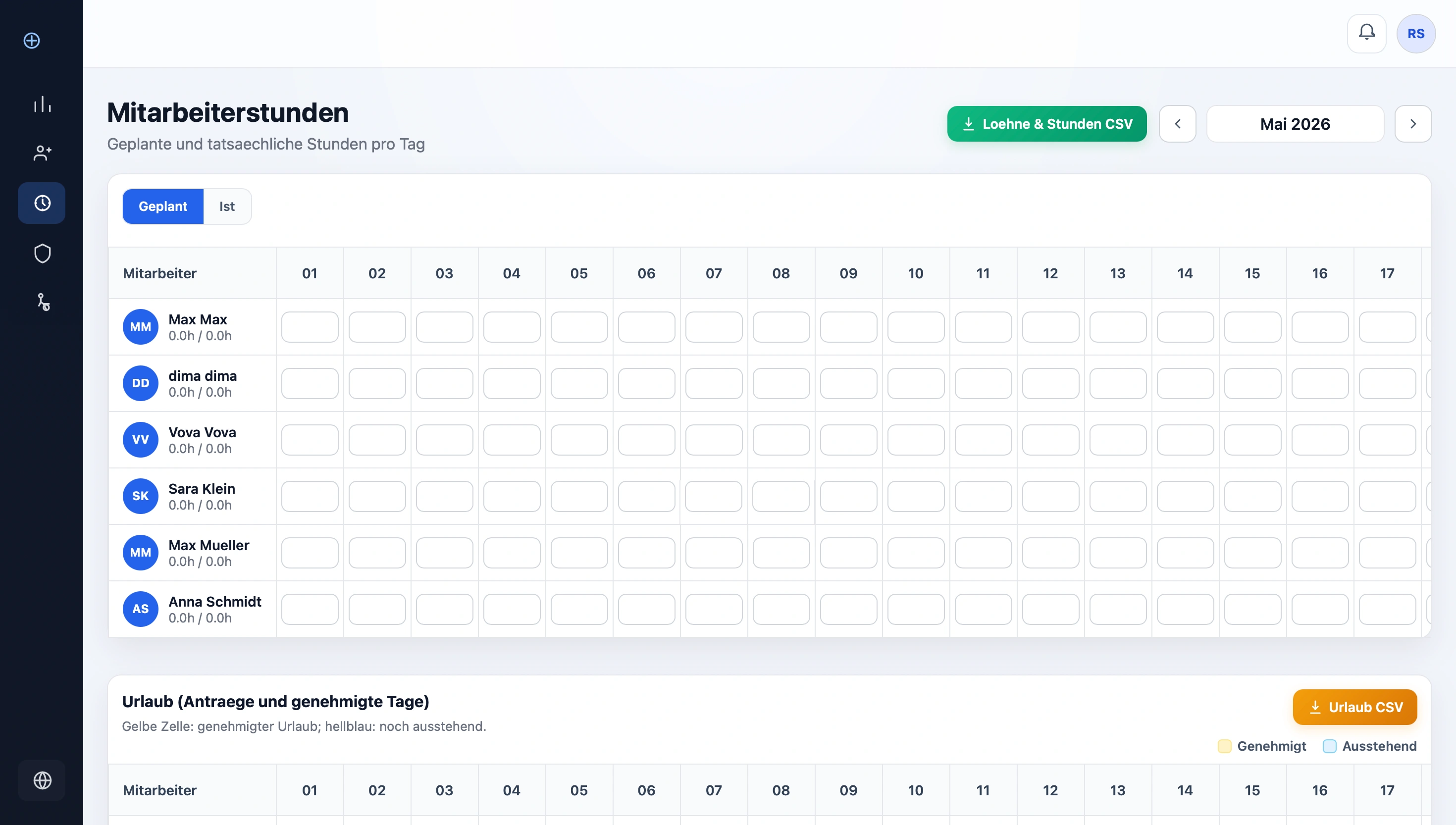
Payroll and Accounting Exports
Employees, hours, absences and month-end summaries are prepared in a payroll-ready format for accounting and downstream systems.
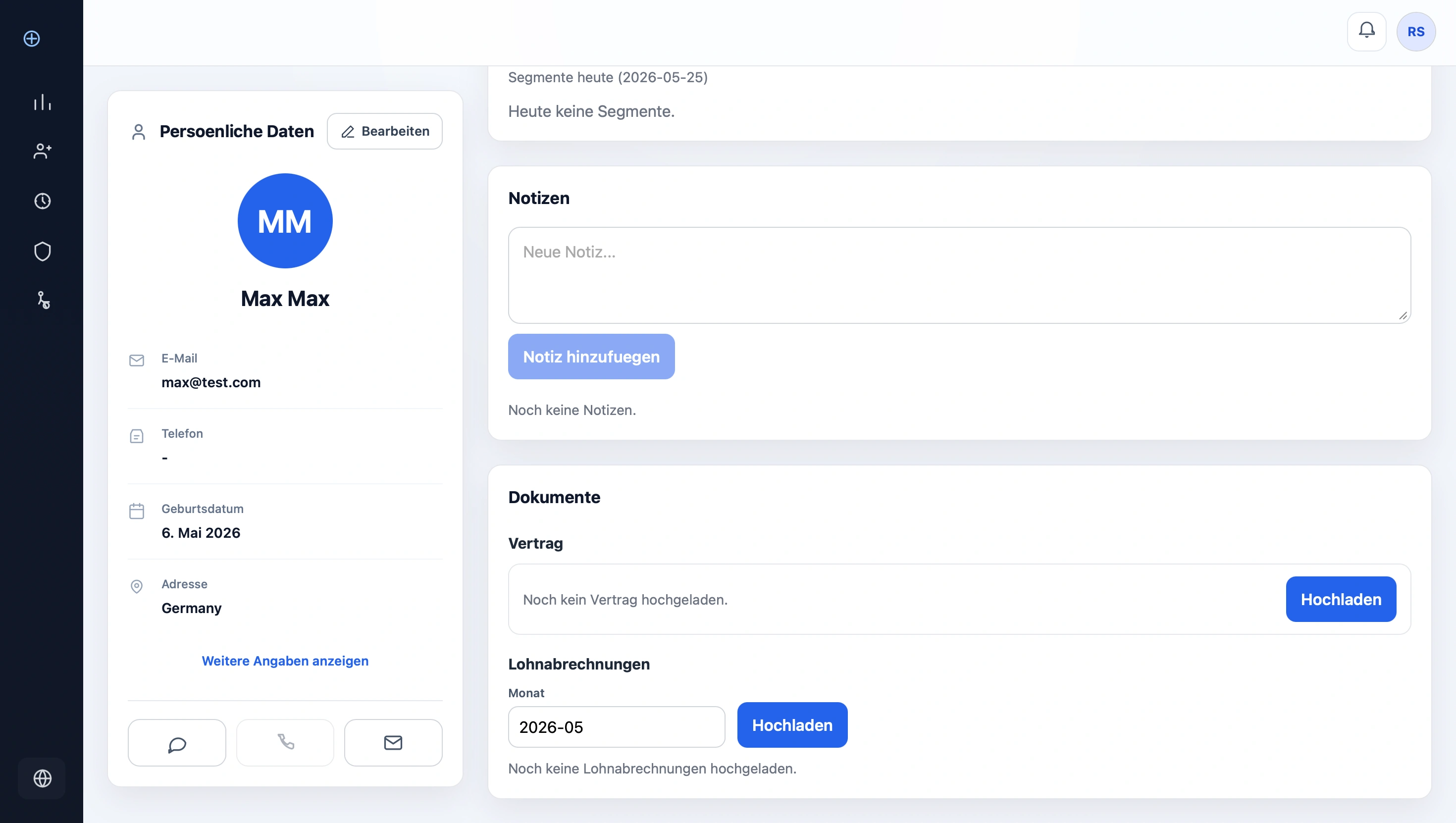
Documents and Contracts
Contracts, payroll documents and employee files are stored centrally and connected to HR and month-end context.
Industry-specific Configuration
Shift, break, absence and approval rules can be adapted to the industry without rebuilding the platform core.
Integration-ready Architecture
Time tracking becomes the connection point between HR data, payroll, accounting and operational rules.
Audit-ready Operational History
Corrections, approvals and month-end summaries remain traceable, giving the company verifiable records instead of informal coordination.
Technical Implementation
Backend
- Laravel (PHP)
- REST API
- Role-based access control
- JWT authentication
- MySQL data model for workforce events and summaries
Frontend and Access
- Vue 3 SPA application
- TypeScript architecture
- Responsive admin and employee interfaces
- Shared API foundation for mobile access
Integration Architecture
- Export mapping for payroll and accounting workflows
- API-first approach for HR and third-party system integration
- Structured monthly summary outputs
- Extensible modular boundaries for future integrations
Business Rules and Compliance
- Planned vs actual hours calculations
- Approval workflows for absences and corrections
- Traceable monthly reporting logic
- Configurable rules for company-specific and industry-specific operations
Results
The client received one workforce flow instead of fragmented spreadsheets, manual checks and separate documents. The system now shows who worked which hours, which absences were approved, which corrections were made and which data is ready for payroll.
The main effect: month-end reporting became structured and verifiable. The platform unified 6 workforce processes and created a reusable foundation for German companies with different industry rules and integration needs.
- 6 workforce processes unified in one platform: employees, time, absences, approvals, documents and payroll
- Less manual month-end reconciliation and spreadsheet dependency
- Payroll-ready data generated from structured time and absence history
- Corrections and approvals remain traceable
- Platform adapts to industry rules, shifts and approval paths