Remove repetitive manual tasks
Data entry, routing and routine notifications should not depend on people repeating the same actions.
Workflow Automation Systems
We connect requests, internal systems and notifications into workflows that run through logic instead of inboxes, spreadsheets and chat messages.
Data entry, routing and routine notifications should not depend on people repeating the same actions.
Information should move between website, CRM, internal tools and reports without re-entry.
Every workflow needs status logic, ownership and a clear next action inside the system.
Automation must be observable. If a flow breaks, the team needs to know immediately.
Automation fails when teams automate chaos instead of mapping the workflow first. Manual handoffs stay hidden behind fragile integrations and invisible process breaks.
Teams keep moving the same information between forms, CRM, spreadsheets and messages.
Important process states are decided in email threads and messenger conversations.
Automation exists, but no one knows where the logic starts, fails or should be updated.
Companies only discover broken flows after clients complain or internal work is delayed.
Requests from forms or portals move directly into structured process states.
Appointments, task allocation and operational handoffs become structured workflows.
Internal workflows no longer depend on chasing people through email.
Analytics and reporting draw from process events instead of manual exports.
References
A selection of completed projects with a focus on architecture and implementation.
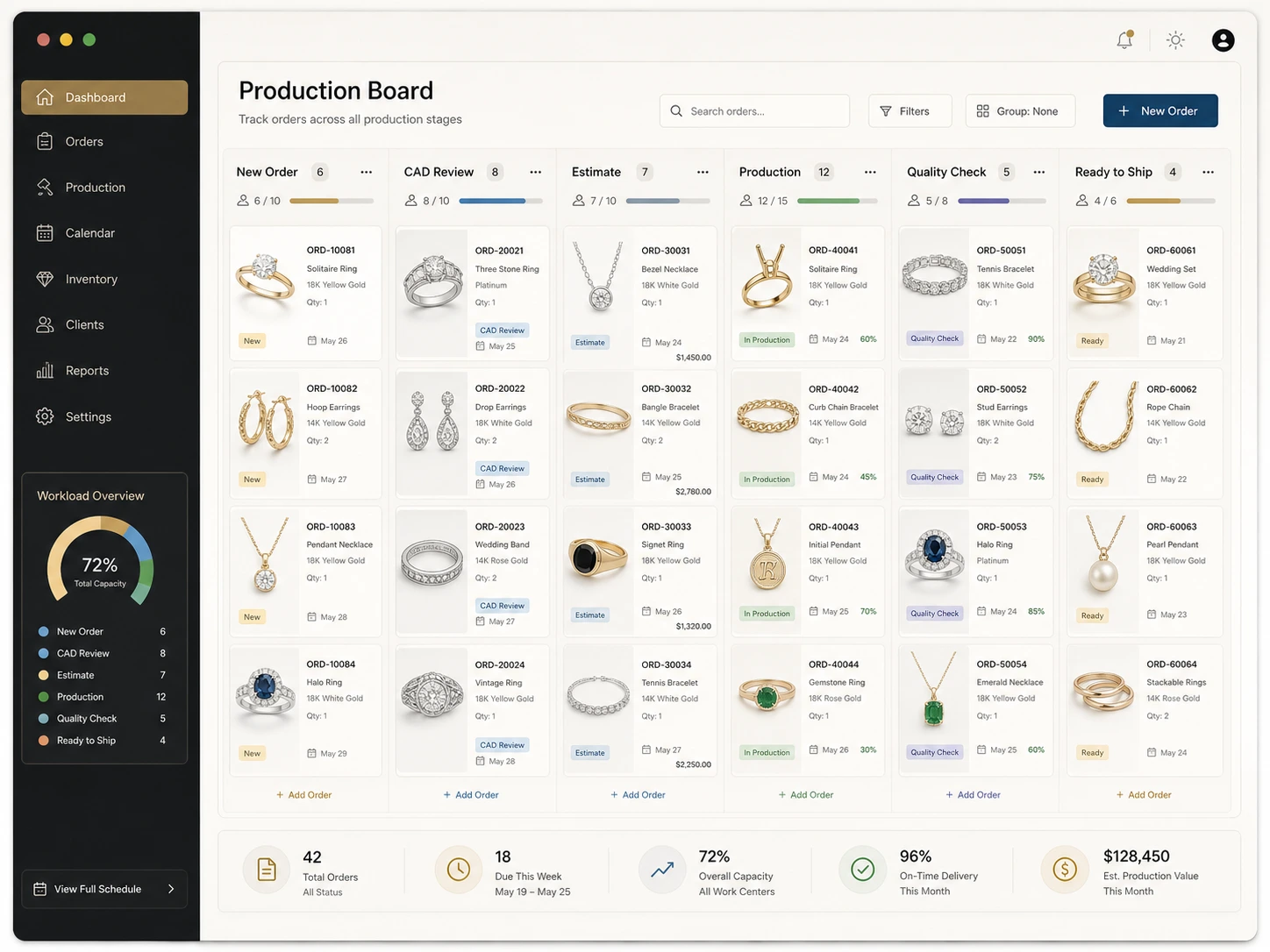
Manufacturing / Jewelry
Custom CRM · Workflow Automation · Client Portal
A single order route for jewelry production: automated assignment, CAD/estimate/invoice context, client portal and production integration.
Key capabilities
Business impact
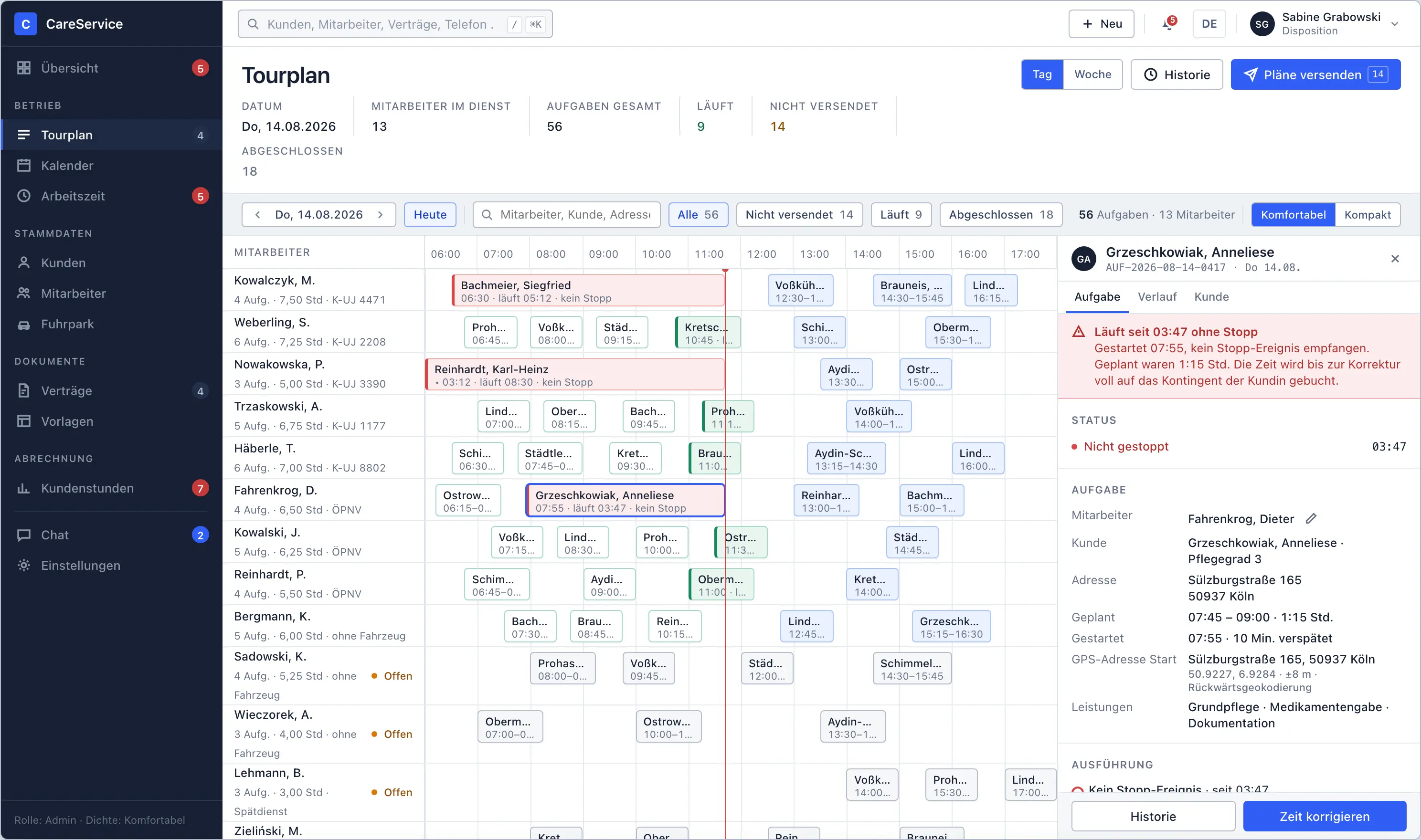
Healthcare / Ambulatory Care
Operations CRM · Tour Planning · Workforce App
A single system for daily care operations: staff, tours, time tracking, mobile task reports with client signatures, payouts, fleet and internal chat.
Key capabilities
Business impact
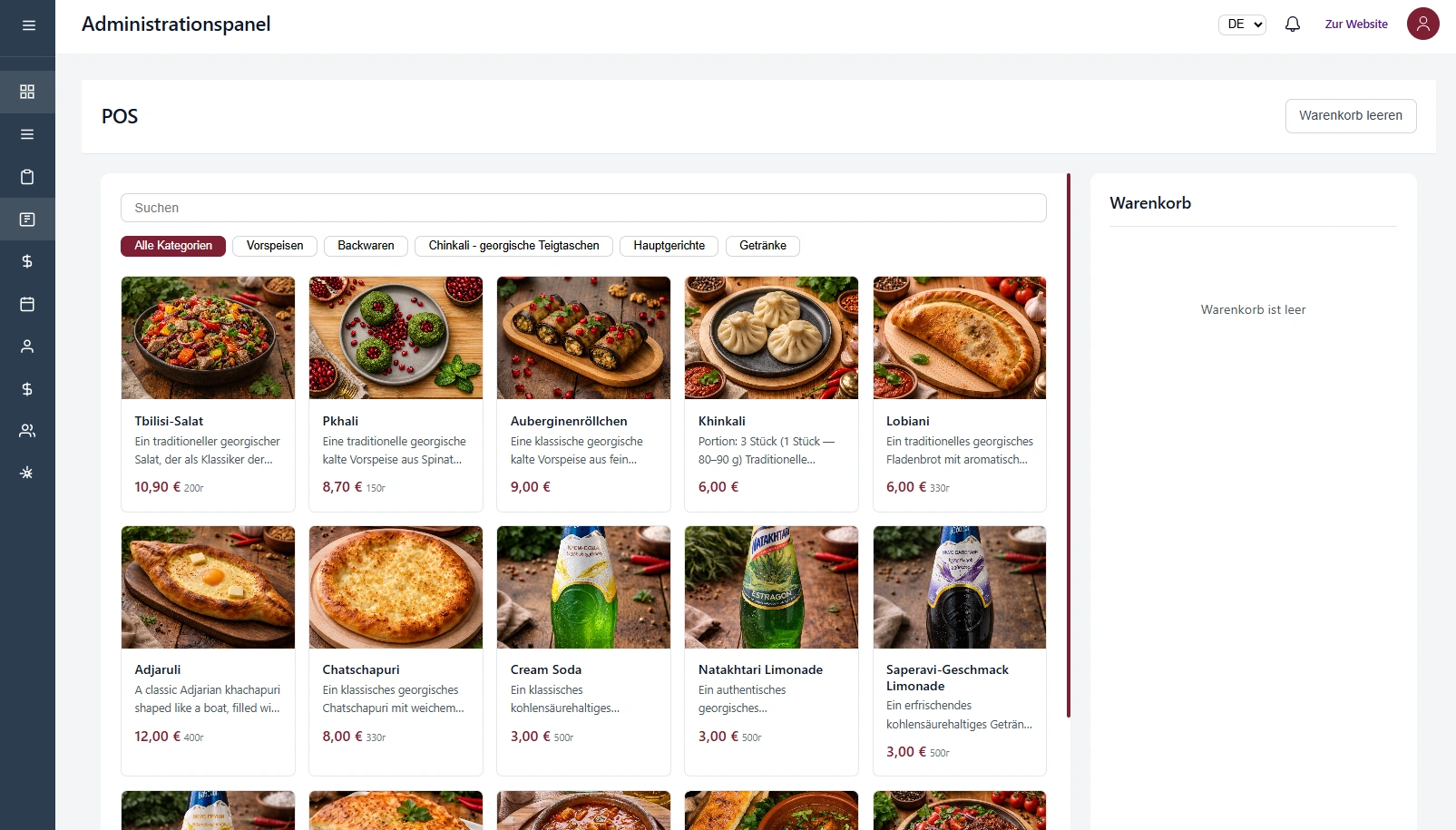
Hospitality / Restaurant
Online Ordering · Reservations · Admin System · Costing
One system for restaurant guest flow and daily operations: 3-language menu, Stripe orders, reservations, real-time chat, kitchen workflow, POS, staff and recipe costing.
Key capabilities
Business impact
We identify break points, current tools and the real business logic behind the workflow.
States, triggers, exceptions and monitoring logic are designed before implementation.
We connect systems, build the orchestration layer and verify edge cases and failure states.
After rollout, we monitor performance and adjust the workflow where real operations demand it.
Integrations
REST APIs / webhooks / internal services / third-party systems
Logic layer
Laravel / Node / workflow services / queues / scheduled jobs
Control layer
Dashboards / alerts / logs / reporting / audit trail
Automating manual processes means replacing repetitive steps across CRM, forms and internal tools with system logic — integrations, automatic triggers and monitoring — instead of forwarding information by hand.
We start with a frequent, cross-system workflow, model the logic, connect systems through APIs and add monitoring — turning ad-hoc manual steps into reliable operational workflow management.
Yes. Most projects start by integrating existing systems and adding workflow logic around them.
No. We use the right approach for the process. In many operational cases, custom logic is necessary for reliability.
We design monitoring, alerts and status visibility so broken or delayed workflows are visible immediately.
Start with a high-friction workflow that repeats often, touches several systems and already causes manual delays.
We can map the workflow, define the control logic and connect the systems around it.
Start the process check